AI arrangement creator
Customers can describe a feeling, occasion, or floral vision and receive arrangement concepts that feel tailored instead of generic.
A full-stack AI-powered flower platform that helps customers generate custom arrangements by mood, occasion, season, or inspiration image while giving florists a SaaS dashboard to manage products, orders, and storefronts.
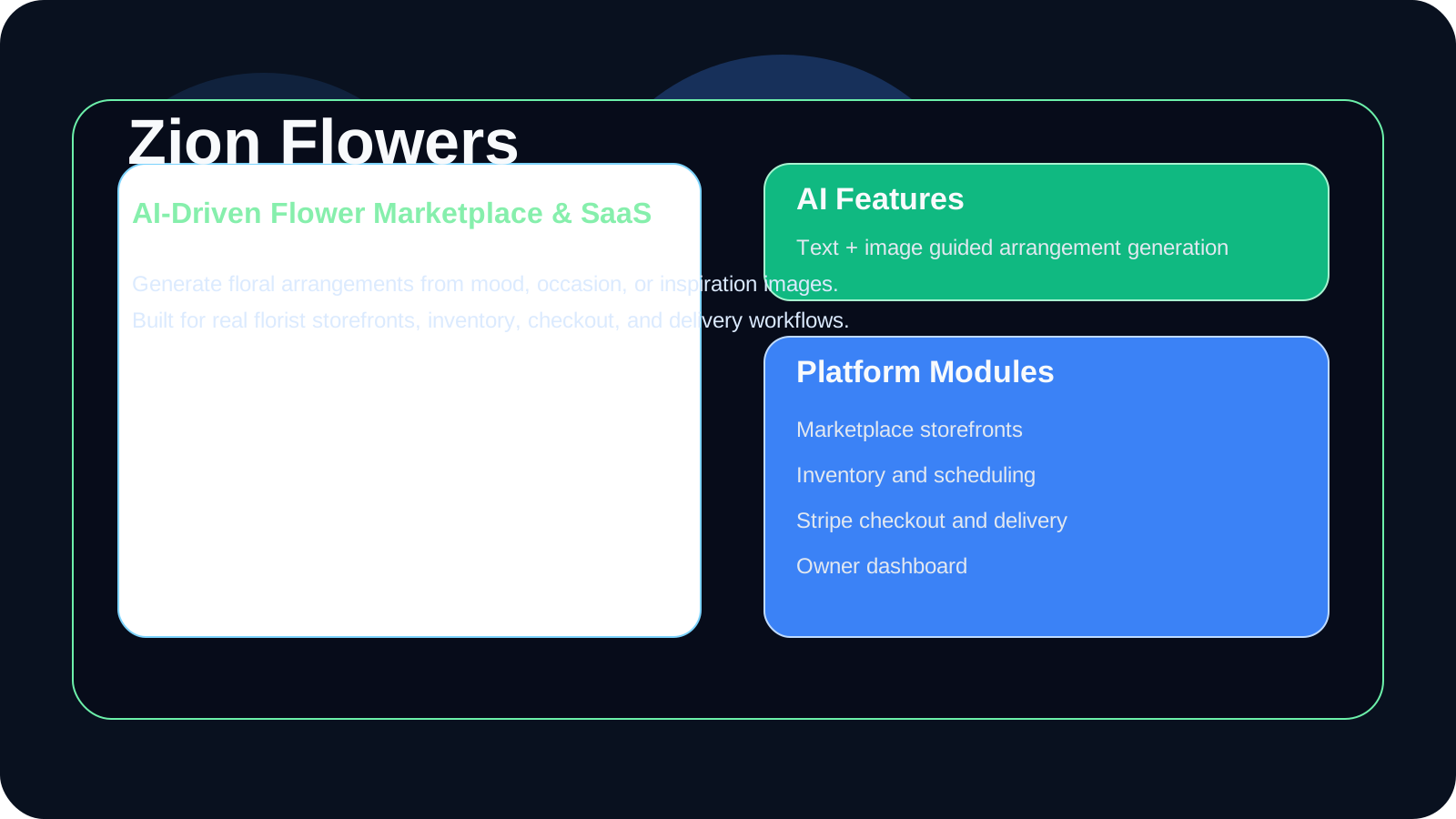
Traditional flower shopping feels limited, generic, and disconnected from a customer’s actual mood, event, or visual inspiration. On the business side, florists also need better digital tools to manage products, storefronts, and online orders without juggling disconnected systems.
Zion Flowers combines AI-generated arrangement recommendations with a multi-shop florist marketplace. Customers can describe what they want, choose flowers, upload inspiration images, and receive personalized arrangement ideas while florists manage the business through a structured SaaS dashboard.
The platform combines AI-assisted arrangement generation with practical commerce and marketplace tooling so the user experience and business architecture support each other.
Customers can describe a feeling, occasion, or floral vision and receive arrangement concepts that feel tailored instead of generic.
The experience adapts to weddings, birthdays, sympathy, celebrations, and seasonal moments with more context-aware product guidance.
Users can upload reference imagery and receive three AI-generated arrangement directions based on the original visual tone.
Customers can narrow the creative output by selecting favorite stems, palettes, and styles before AI recommendations are produced.
Each florist can manage a branded storefront while participating in a broader marketplace that supports discovery and conversion.
Florists can manage pricing, seasonal products, availability, and fulfillment constraints from a clean operations dashboard.
The commerce flow supports delivery, tax, tipping, and scheduling so the platform feels ready for real transactions instead of demo-only browsing.
Store owners get a SaaS-style control panel for catalog updates, order management, storefront settings, and business visibility.
The stack balances frontend polish, backend structure, operational clarity, and marketplace growth potential.
Zion Flowers is structured as a multi-surface platform so customer acquisition, marketplace discovery, AI flows, and florist operations can evolve without collapsing into one overloaded interface.
Landing, value proposition, florist acquisition, and product education pages built to convert visitors into shoppers or shop owners.
Discovery pages for storefronts, collections, seasonal products, and arrangement browsing with a customer-first purchase flow.
Prompt input, flower selection, image upload, and recommendation generation designed as a guided experience instead of a generic form.
Internal tools for managing products, orders, scheduling, storefront settings, and onboarding future florist partners.
FastAPI services handle orchestration across product data, AI workflows, auth-aware actions, checkout logic, and operational endpoints.
PostgreSQL stores the core business model while Clerk and Stripe support identity, account separation, and transactional flows.
I designed and built Zion Flowers as a full-stack AI SaaS concept, focusing on product architecture, frontend UX, backend API structure, database planning, and AI-driven user flows. I treated it like a startup-ready platform where customer delight and business operations need to work together from the start.
The hardest decisions were less about code and more about defining the right product boundaries early so the concept could scale beyond a single demo flow.
Zion Flowers demonstrates my ability to build beyond a basic CRUD app by combining full-stack development, AI product strategy, SaaS architecture, and user-centered design. It shows how I think about product systems, not just isolated screens or endpoints.
Zion Flowers is designed to communicate product strategy, full-stack execution, and AI-native thinking in a format that works for both recruiters and startup founders.